

Buying a hospital wheelchair is a key decision you don’t want to get wrong. A medical wheelchair is an important device for healthcare facilities, caregivers and patients. A well-designed wheelchair improves mobility, increases comfort, safety and recovery outcomes. Whether you are a hospital administrator, clinic owner, or home caregiver, it is important to understand the key features that can help you make an informed choice. With many models flooding the market, differing in frame material, wheel type, weight capacity, and features, making the right choice is always challenging for many. Here is the buying guide that breaks down what to check before you buy, so you invest in the best hospital wheelchair that performs reliably in what matters most.
What is Hospital Wheelchair?
The hospital transport wheelchair is a specialized mobility device designed for use in clinical and institutional settings such as hospitals, nursing homes, rehabilitation centres, and clinics. It is used to transport patients safely and comfortably. These wheelchairs, unlike standard ones, are built with enhanced durability, ergonomic designs and medical-grade materials to support patients with varying mobility conditions, ensuring ease of movement within the healthcare facilities.
Hospital Wheelchair Buying Guide – 12 Essential Factors to Look For!
When purchasing a patient wheelchair, focus on these 12 important features to ensure patient safety, durability, and quality.
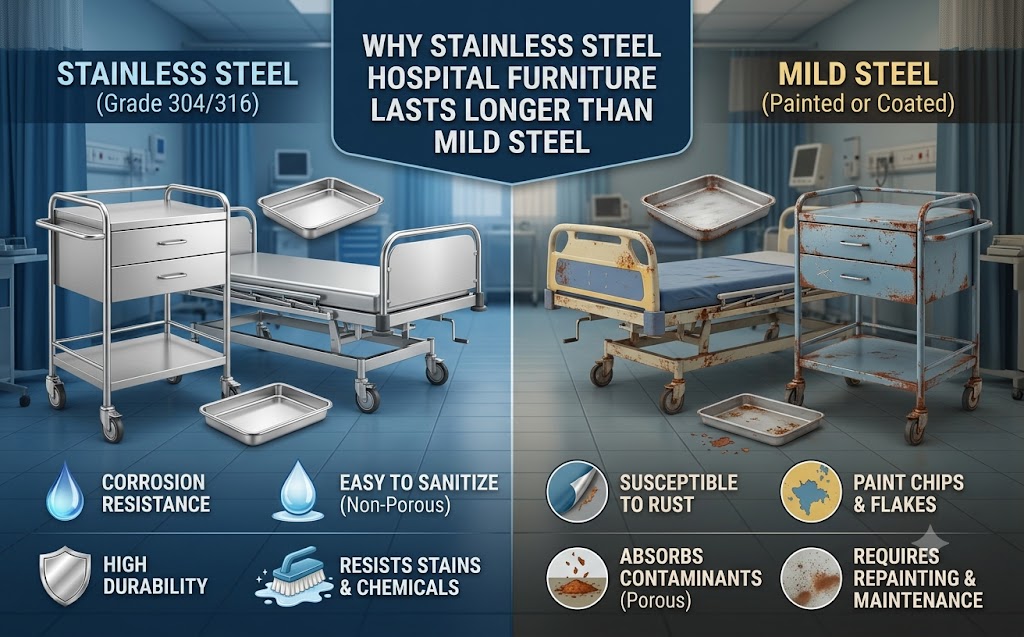
- Frame Materials and Durability: When buying wheelchairs for hospitals, check the material from which they are made. Opt for a wheelchair that is made from premium quality materials such as steel or aluminium. These materials offer durability, corrosion resistance and long-term performance, especially in a hospital environment.
- Weight Capacity: Load-bearing capacity is one of the most significant things to consider before buying a wheelchair. A standard hospital wheelchair should support different patient weights safely without compromising stability. If your facility regularly handles heavier patients, bariatric wheelchairs are important.
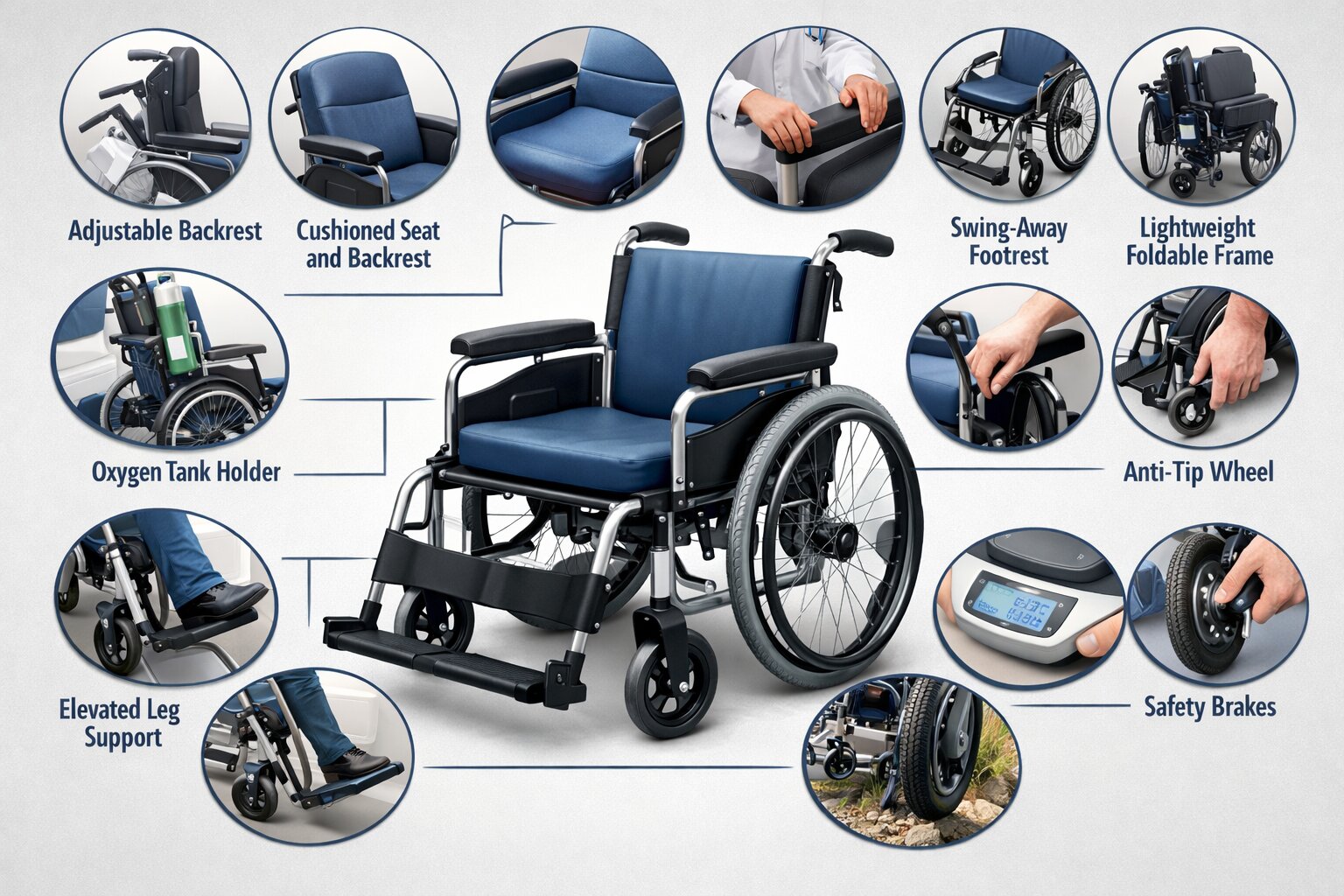
- Seat Width and Depth: When considering the key hospital wheelchair features, check if it has comfortable seating and cushioning. Proper cushioning prevents sores and increases patient comfort during long hours. Check if the chair has a breathable and easy-to-clean seat.
- Wheel Type and Size: When choosing the best wheelchair for hospitals and clinics, check its wheel type and size. Larger rear wheels allow self-propulsion, while the smaller ones are ideal for assisted movement. Solid rubber tires do not need regular maintenance, while the air-filled ones require maintenance at regular intervals.
- Braking System: Reliable and easy-to-engage locking brakes on both wheels; are significant and a must for patient safety, especially during transfers in and out of the chair.
- Foldability and Storage: Foldable hospital wheelchairs are easy to store and transport, making them ideal for hospitals with limited space or frequent patient transfers.
- Footrests and Armrests: Adjustable and detachable footrests in a manual hospital wheelchair improve comfort and support different patient conditions, including post-surgery recovery. Also, flip-up or removable armrests make it easier for patients to transfer in and out of a wheelchair.
- Cushioning and Upholstery: Padded and pressure-relieving cushions reduce the risk of skin breakdown for patients who spend long hours seated. Upholstery also must be easy to clean and disinfect.
- Easy to Clean: In clinical settings, antimicrobial, non-porous materials that withstand frequent disinfection are important to prevent cross-contamination between patients. Invest in a wheelchair that has a smooth surface and anti-rust coatings.
- Safety Features: Check if the wheelchair has anti-tip wheels, seat belts and strong construction to ensure maximum patient safety during use.
- Manufacturer Reliability and Certification: Work with a professional hospital wheelchair manufacturer with certifications and proven expertise. This ensures compliance with healthcare standards and consistent product quality.
- Portability and Transport Compatibility: Consider the overall weight of the wheelchair and check if it fits easily into ambulances, vans or storage areas without requiring extra manpower.
Case Study
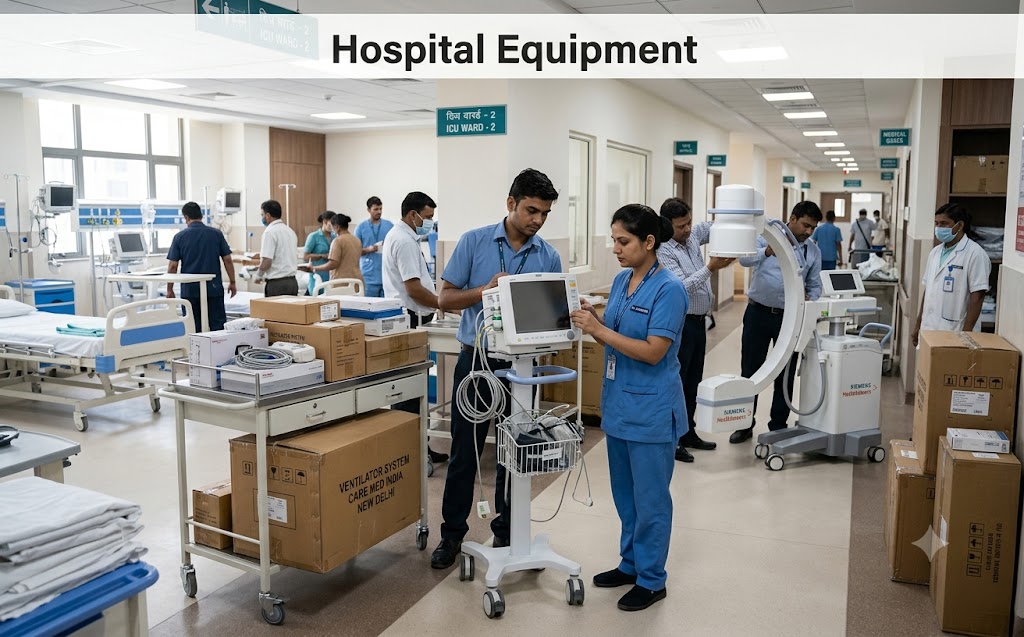
A mid-sized hospital in Delhi faced recurring issues with low-quality wheelchairs purchased from an unverified supplier. Patients often complained about discomfort, while the staff struggled with broken brakes and unstable frames. This not only affected patient satisfaction but also increased their maintenance costs.
The hospital management worked with the professional hospital equipment manufacturer to deliver premium-quality, medical-grade wheelchairs. The management, based on the wheelchair buying guide for hospitals, ordered the wheelchairs from that supplier.
The management observed key improvements-
- Increased patient comfort due to ergonomic design
- Reduced maintenance costs with durable materials
- Improved safety with cutting-edge braking systems
- Better staff efficiency in patient handling
Within no time, patient feedback improved and operational disruptions reduced. This case study showcases how investing in high-quality hospital wheelchairs from a trusted and reliable manufacturer directly impacts healthcare service quality and efficiency.
When planning to upgrade or invest in hospital wheelchairs, first consider the hospital wheelchair buying checklist and work with a dedicated manufacturer who understands healthcare needs.
Work with a professional hospital equipment supplier today to get personalized, durable and compliant wheelchair solutions for your facility.
FAQs
- What features should a hospital wheelchair have?
A hospital wheelchair should have a strong frame, ergonomic seating, reliable brakes, adjustable footrests, smooth mobility and medical-grade safety requirements for utmost patient comfort and support. United Poly manufactures and supplies premium quality medical wheelchair at tailored to your requirements and budget. - How to choose a hospital wheelchair?
Choose a hospital wheelchair based on the patient’s mobility needs, weight capacity, safety features, and durability and quality standards of the manufacturer. - What is an ideal weight capacity for a hospital wheelchair?
Most hospital wheelchairs support 100-150 kg, but heavy-duty options are available for higher requirements. Work with United Poly for the ideal hospital wheelchair weight capacity for your facility.
About the Author
United Poly is a leading Indian manufacturer, supplier and exporter of the best quality medical equipment with over 4 decades of industry expertise. Certified with ISO 9001:2015, ISO 13485: 2016, FDA and CE certifications, the brand is committed to delivering products that meet global quality and safety standards.
Renowned for its quality, innovation and reliability, United Poly offers a wide range of hospital equipment including wheelchairs, walkers, sterilization solutions and more, increasing patient care, safety and operational efficiency.